

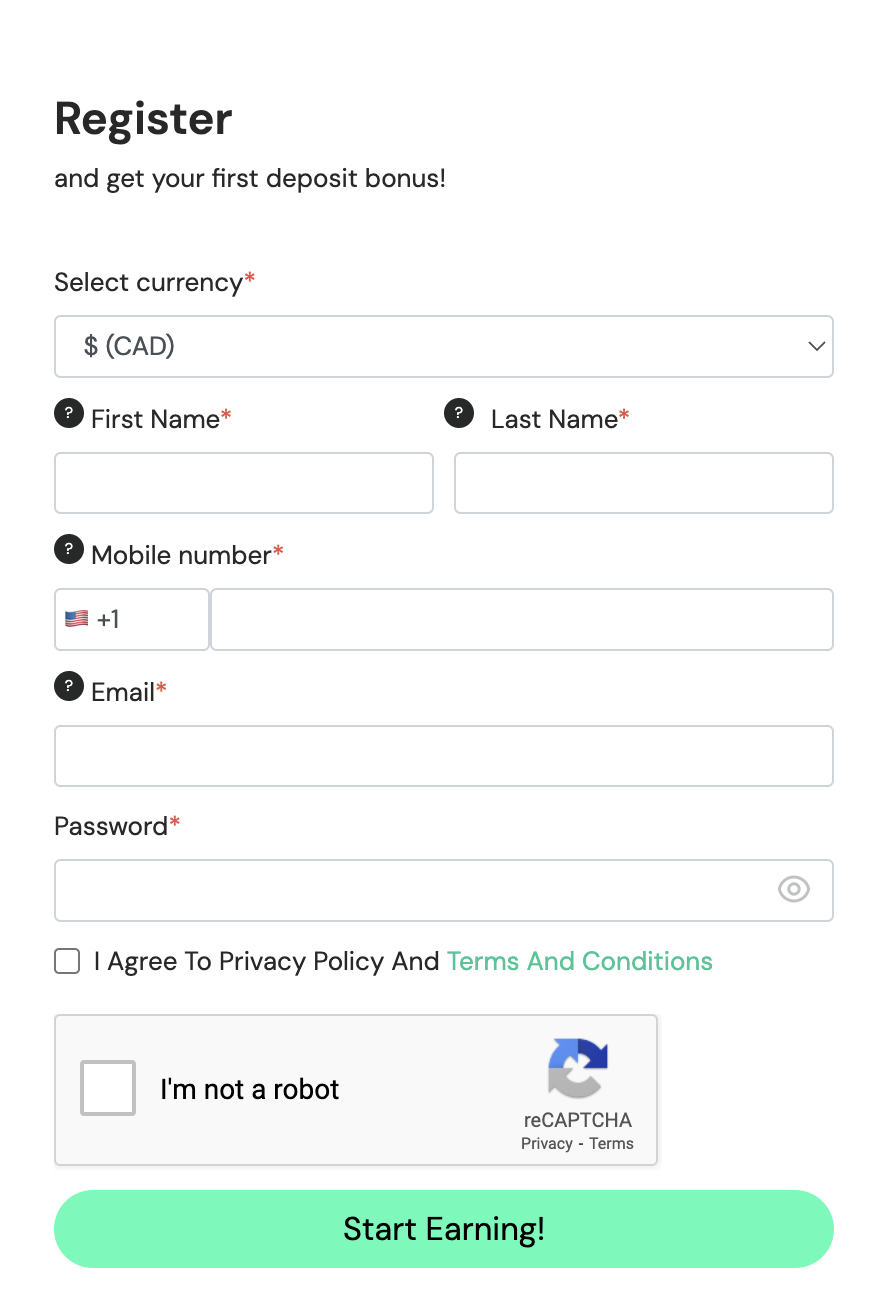
Every online gaming platform operating in Spain collects personal data when a user creates an account. The privacy policy is the document that details exactly what happens to that information. At BroWinner Casino, the approach to data protection is guided by the General Data Protection Regulation and the Organic Law on Data Protection and Digital Rights Guarantee. These regulations set a high standard for how personal details should be processed, stored, and shared. Reading a privacy policy might not be the most engaging part of joining a casino, but understanding those terms is vital for anyone who values their digital footprint. The policy describes everything from identity verification documents to payment transaction records. It also explains the rights every user has over their own information. Taking a few minutes to read through these details can prevent future misunderstandings and ensure a more secure gaming experience in the Spanish market.
Information Sharing Policies and Third-Party Agreements
No online casino runs in complete isolation. Payment processors, game developers, identity verification services, and regulatory bodies all contribute in the ecosystem that frames a modern gaming platform. The privacy policy must deliver a candid account of these data-sharing relationships. In Spain, personal data may be shared with law enforcement agencies and the Directorate General for the Regulation of Gambling when obligated by law. Commercial partners who handle payments or host games are bound by data processing agreements that contractually require them to maintain security standards matching those of the operator. BroWinner Casino ensures that its policy lists the general categories of third-party recipients rather than keeping users uninformed about where their information travels. International data transfers outside the European Economic Area require additional safeguards, such as standard contractual clauses or adequacy decisions, which the policy should explicitly mention.
Affiliate Scheme Data Duties
The relationship between casinos and their marketing affiliates presents a unique data-sharing dynamic that many privacy policies miss. When a user lands on BroWinner Casino through an affiliate link, certain tracking data is generated and shared to assign the referral correctly. This data is typically pseudonymised and centres on traffic patterns rather than deeply personal financial information. However, responsible affiliate partnerships require clear contractual boundaries. Affiliates operating in the Spanish market must adhere to the same data protection standards as the operator itself, particularly when dealing with any consumer-facing communications. The privacy policy clarifies that affiliates are independent data controllers for their own marketing activities and are responsible for obtaining their own consents. BroWinner Casino maintains strict oversight of its affiliate network to confirm that promotional activities targeting Spanish residents comply with both advertising regulations and privacy obligations.
Grasping Consent Mechanisms and User Privileges
The idea of consent has been fundamentally reformulated by modern data protection laws. Silence, pre-ticked boxes, or inactivity no longer form valid consent. A privacy policy must describe how users can grant, control, and retract their permission for various types of data processing. Marketing messages, for instance, necessitate separate and explicit opt-in consent that is distinct from the acceptance of terms and conditions. Users in Spain have the right to access all data held about them, seek corrections to inaccurate information, and demand the deletion of data that is no longer required for its original purpose. The right to data portability enables individuals to receive their information in a structured, commonly used format and move it to another service provider. BroWinner Casino outlines the exact procedure for enforcing each of these rights, including the expected response timelines and the designated contact points for privacy-related requests.
Navigating the Right to Object and Restrict Processing
Beyond the commonly cited rights of access and erasure, users have the power to object to certain types of processing and to request restrictions on how their data is used. If a user thinks that data is being processed for direct marketing purposes, they have an absolute right to object without requiring to provide a justification. In more complex scenarios involving legitimate interest processing, an objection requires a balancing test between the user’s interests and the operator’s legal obligations. Restriction of processing puts data in a state of limbo, where it can be stored but not actively used. This right is especially relevant during disputes over data accuracy or the lawfulness of processing. The privacy policy at BroWinner Casino details the specific circumstances under which restrictions apply and how they impact the user’s ability to continue using gaming services while a dispute is being resolved.
Protective Actions and Breach Notification Protocols
System protection is the basis upon which all privacy promises are established. A privacy policy should detail the safeguards in place without disclosing so much information that it undermines those very protections. Encryption protocols for data in transit and at rest, strict access controls based on job roles, and routine security audits are typical measures in the regulated Spanish market. BroWinner Casino employs industry-standard TLS encryption and preserves a security framework that completes independent testing. More significant than the list of technologies is the existence of a breach notification plan. Under GDPR, certain types of personal data breaches must be notified to the relevant supervisory authority within seventy-two hours of detection. If a breach presents a high risk to individual rights and freedoms, the affected users must be notified without undue delay. The policy verifies this commitment to transparent communication during security incidents.
What Explains Privacy Policies Are Present across the Gaming Field
Privacy policies are not merely a formality designed to take up room at the bottom of a website. They are legal requirements enforced by data protection authorities throughout Europe, including the Spanish Agency for Data Protection. These documents serve as a binding agreement between the operator and the user, outlining how sensitive information will be managed throughout the business relationship. In the gaming sector, the volume of data processed is particularly high because operators must authenticate identities, oversee transactions, and meet anti-money laundering legislation. Without a clear privacy policy, a casino would be operating in a legally grey area, possibly exposing both the business and its customers to significant risks. The document establishes transparency and defines expectations from the very beginning of the user journey. For BroWinner Casino, the privacy policy is a component of a broader commitment to working within the strict boundaries set by Spanish and European regulatory frameworks.
The Link of Privacy and Responsible Gaming
Data collection is not only about marketing or payment processing. In the regulated Spanish market, privacy policies also support responsible gaming initiatives. By examining deposit patterns, session durations, and behavioural markers, operators can spot early signs of problematic gambling behaviour. This analysis depends entirely on the lawful collection and processing of personal data, which must be specifically described in the privacy policy. A thorough policy will explain how account activity is monitored for player protection purposes, not just for commercial gain. At acuerdo de usuario BroWinner Casino, data is used to trigger automated safety alerts and to guide players towards self-assessment tools. The legal justification for this kind of monitoring is grounded in the operator’s obligation to prevent harm, which sits alongside its duty to protect personal information. Without a robust privacy framework, responsible gaming interventions would lack the necessary legal foundation and could be challenged as intrusive rather than protective.
How Personal Data is Classified and Acquired
Not every data is handled the same beneath Spanish and European privacy legislation. A well-structured privacy policy distinguishes between basic personal information and special categories of data that require heightened protection. Basic data usually includes full names, residential addresses, email contacts, and telephone numbers. This information is essential for account creation and identity verification. Beyond this, gaming operators also accumulate technical data such as IP addresses, device identifiers, and browser types, which aid secure accounts and prevent fraudulent access. Financial data, including deposit amounts, withdrawal requests, and payment method details, fits into another sensitive category that demands strict security measures. BroWinner Casino assures that its policy clearly outlines each category of data and the specific legal basis on which it is gathered. This classification system allows users to comprehend exactly what kind of information they are sharing and the precise purpose behind each data point.
The Function of Know Your Customer Procedures
Spain imposes strict Know Your Customer obligations on all licensed gaming operators. These procedures mandate the collection of official identification documents, proof of address, and sometimes source of funds declarations. The privacy policy is the point where this intrusive but legally necessary process is detailed. Users should understand that refusing to provide this information will result in account restrictions or closure, not because of arbitrary operator policy but because of binding anti-money laundering laws. The policy should specify how long these sensitive documents are kept and who has access to them within the organisation. BroWinner Casino integrates these explanations directly into its privacy framework, making it clear that identity verification is not a commercial choice but a regulatory mandate. The storage of these documents follows strict encryption protocols and limited access permissions, ensuring that highly personal government-issued identification does not become a vulnerability.
Use of Cookies and Monitoring Technologies
Tracking cookies and similar tracking technologies represent a specific group of information handling that demands its own detailed explanation. These tiny data files stored on a user’s device allow webpage features, remember preferences, and deliver statistics that assist operators enhance their offerings. Spanish regulations stipulate that non-essential cookies, notably those employed for promotion and behavioral monitoring, only be deployed after the user provides clear consent. A thorough data protection statement describes the contrast between session cookies that terminate when the browser session ends and long-term cookies that stay for extended durations. BroWinner provides precise options that permit users to accept or refuse various cookie types depending on their particular uses. The notice also explains how external cookies, particularly those placed by tracking services and social network connections, operate together with the details that the gaming site collects immediately from account registration and transaction records.
Popular Queries
For how long does BroWinner Casino keep my data?
Storage durations are based on the kind of information and the regulatory requirements associated with it. User account details is stored for the entire the account relationship and for five years after the account is deactivated, following Spanish anti-money laundering requirements. Payment records comply with similar statutory retention schedules. Advertising settings and related data are stored only until authorization is removed. Payment information are safely kept by licensed payment processors and are governed by their data retention rules. Once the legal retention period expires, BroWinner Casino proceeds with permanent erasure or anonymization of personal data, guaranteeing that no identifying data remains in current or backup systems beyond its mandatory storage duration.
Is it possible to use this casino if I refuse to accept the data protection policy?
Agreement to the privacy policy is a necessary condition for utilizing any licensed online gaming platform in Spain. The data collected under this policy is essential for identity verification, fraud prevention, and payment processing. Without this data, the operator cannot meet its legal and contractual obligations. BroWinner Casino cannot provide services to individuals who refuse the privacy policy, as doing so would contravene the terms of its gaming licence and expose the business to regulatory penalties. Users who have concerns about certain data processing activities are advised to contact the data protection officer before registering an account to discuss potential accommodations within the boundaries of operational and legal requirements.
How are changes to the privacy policy conveyed to users?
Important updates to the confidentiality policy are communicated through email messages delivered to the address connected to each active account. Non-material updates, such as explanations of existing language or changes to internal procedures that do not affect user rights, may be posted on the website without direct notification. Significant changes that affect the nature or purpose of data processing will require renewed authorization from users before they can continue accessing their accounts. BroWinner Casino keeps a changelog that tracks the evolution of its privacy policy over time, allowing users to review previous versions and grasp exactly what terms governed their data at any point in the business relationship.
